Brake pads press against a rotor to slow the wheel down, and that friction wears the pad material a little every time you stop. Over time the pad gets thin, the rotor can wear unevenly, and the whole system loses its edge. It is a wear item by design, built to sacrifice itself so the rotor and the rest of the system last longer. How fast it wears depends on driving style, stop and go traffic, hills, and the roads around Lakewood and the nearby towns we drive through. Someone doing mostly highway miles might get a long stretch out of a set of pads. Someone doing short trips with a lot of stopping, or hauling a heavier load, will burn through them faster. Either way the pad is not meant to last forever, and waiting too long to deal with it turns a simple job into a bigger one.
Signs You Need Brake Service
- Grinding or metal on metal noise when braking
- High pitched squeal that comes and goes
- Car pulls to one side when you brake
- Brake pedal feels soft or sinks toward the floor
- Steering wheel shakes when slowing down
- Longer stopping distance than normal
The first sign is usually sound, not feel. A high pitched squeal means the pad has a built in wear indicator doing exactly what it is supposed to do, which is warn you before things get worse. A grinding noise is a different story. That means the pad is gone and metal is hitting metal, which chews into the rotor surface and costs more to fix the longer it runs. A soft or sinking pedal is a separate problem entirely, often pointing to air or fluid in the brake line rather than worn pads. Knowing which sound or feel you are dealing with matters, because it changes what we look at first and whether the fix is a quick pad swap or something tied to the hydraulic side of the system.
Before we replace anything we measure pad thickness and check the rotors for grooves, heat spots, or warping, since a rotor that looks fine on the surface can still be out of spec underneath. We also check the calipers to make sure they are moving freely on their slides, because a stuck or dragging caliper will wear one side of a pad faster than the other and can also drag on the rotor even when you are not braking. This step matters because it tells us whether you actually need pads only, or pads and rotors together, before any parts come off the car. Skipping this check and just swapping pads can leave an underlying problem in place that wears the new pads out just as fast.
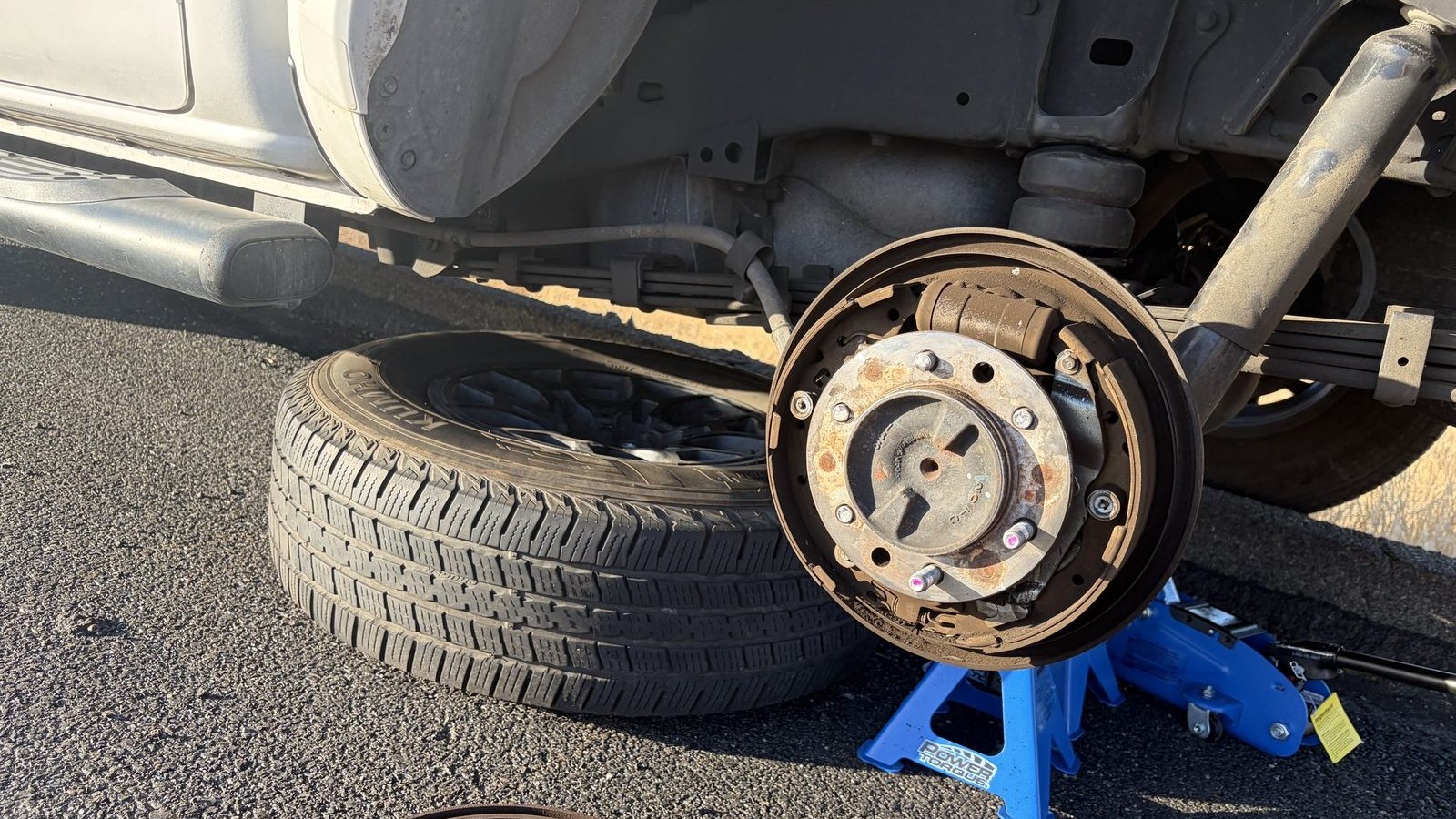

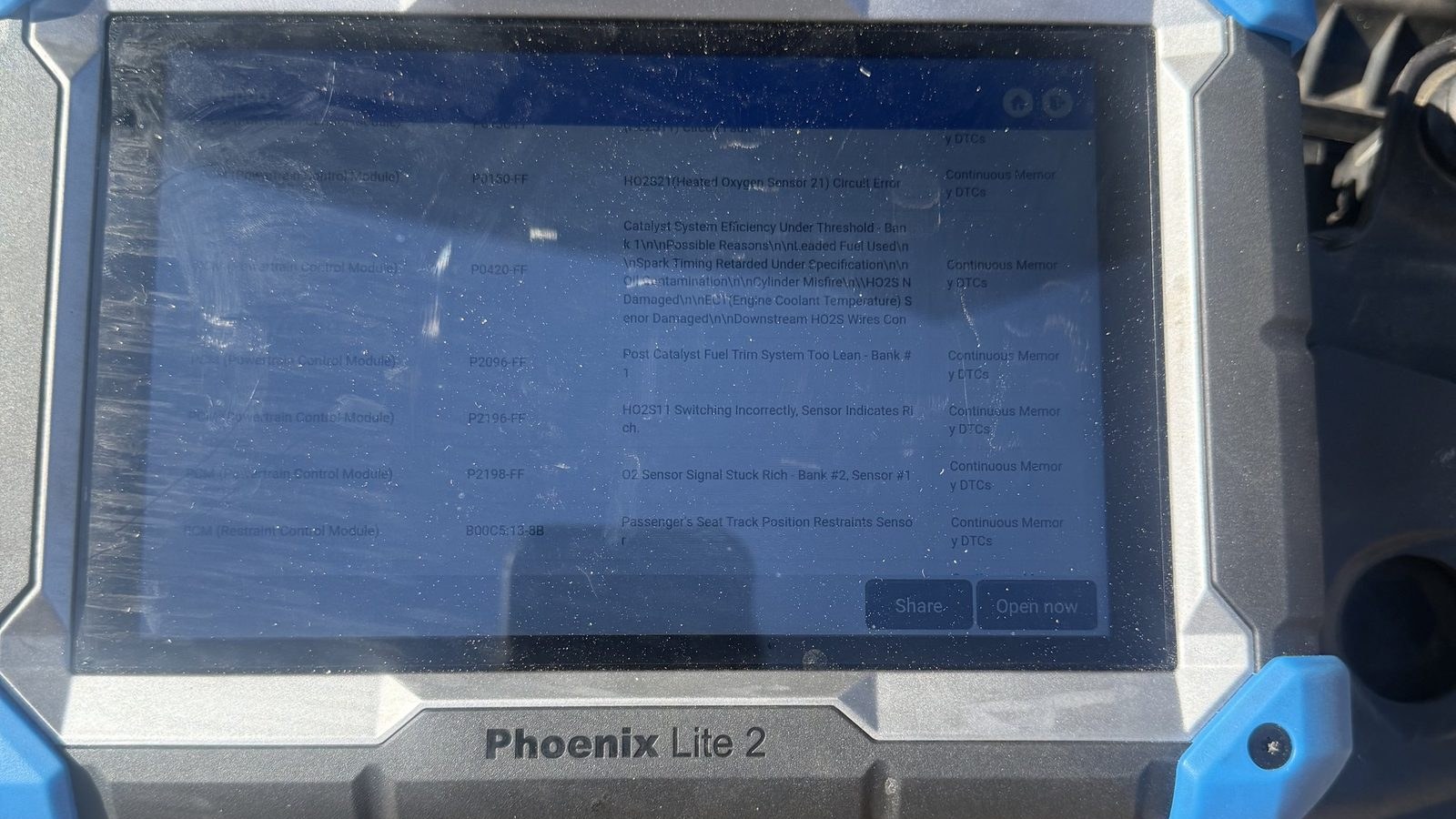
A standard brake repair job means removing the wheel, pulling the caliper off its mount, swapping the worn pads for new ones, and inspecting or resurfacing the rotor depending on what we found during the check. We also check the brake fluid level and take a look over the lines and hoses while everything is already apart, since that is the easiest time to spot a leak, a cracked hose, or fluid that looks contaminated. Fluid that has absorbed moisture over time can affect how firm the pedal feels and how well the whole system performs under hard braking. Catching a line or hose issue during a routine pad job, while the wheel is already off, saves a second trip to deal with it later.
A straightforward pad replacement is the smaller end of the job, usually quick work once the wheel is off and the caliper is loose. It gets bigger from there. If the rotors are too worn or too grooved to resurface and need full replacement instead, that adds parts and time to the visit. If a caliper has seized up and needs to be rebuilt or swapped, that is another layer of work on top of the pads. Rear brakes bring their own complication too, since many vehicles route a parking brake mechanism through the rear caliper or drum, and that takes extra care to service correctly. None of this is unusual, it is just part of why one brake job can look very different from the next depending on what the inspection turns up.
If you hear grinding, the smartest thing you can do before we get to it is drive gently. Avoid hard stops, leave more following distance than usual, and try not to let the car coast up fast on anyone. Every mile driven with metal on metal contact digs the pad backing plate deeper into the rotor surface, and that damage does not reverse itself. What starts as a pad only job can turn into a pad and rotor job, or worse, if it runs too long. Pay attention to pulling to one side under braking too, since that can point to uneven wear or a caliper that is not releasing properly, something worth mentioning when you call so we know what to check first.
We work on brake repair calls across Lakewood, Wheat Ridge, Edgewater, Mountain View, Lakeside, Golden, Arvada, and Sheridan, bringing the tools and parts needed to do the inspection and the repair at your vehicle rather than a shop bay. That means the same checks on pad thickness, rotor condition, and caliper movement happen wherever the car is sitting. Brakes are not a system to guess on, since they are the one thing on the car you cannot afford to have fail. Whether it is a squeal that just started or a grind that has been going for a few days, getting it looked at and measured is the only way to know if you are looking at a simple pad swap or something more involved with the rotors or calipers.
What to Tell Us When You Call
- Year, make, and model of the car
- What you are hearing or feeling, like grinding or a soft pedal
- Which brakes, front, rear, or both
- Where the car is parked in Lakewood or a nearby town

 Supercanic